
An Intelligence-Scenario Analysis on the Re-Engineering of the Middle East
From Dismantling the (Proxy-State) Model to Structural Regional Confrontation
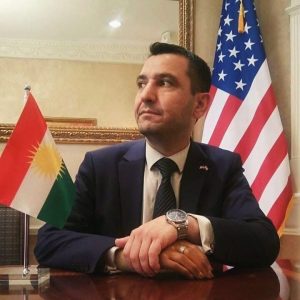
By: Sherzad MamSani
Political Writer & Strategic Analyst, EastMed News Contributor
President, Israel–Kurdistan Alliance Network
The closing weeks of 2025 mark not a simple escalation of regional crises, but a structural convergence of strategic theaters: Iran’s nuclear trajectory, the future of armed non-state actors, energy security in the Eastern Mediterranean, Europe’s re-militarization, and the Kurdish question as a pillar of regional stability.
This paper argues that 2026 represents a year of structural rupture, not tactical adjustment. The international system is no longer negotiating behavior; it is attempting to dismantle an entire regional model—the proxy-state system—and replace it with a framework based on sovereignty, energy integration, and collective security.
1. Introduction: Why 2026 Is a Structural Turning Point
The simultaneity of events at the end of 2025 reveals a deliberate sequencing rather than coincidence. Diplomatic signals, military posturing, energy agreements, and legal-institutional shifts indicate that the Middle East is entering a post-containment phase.
The central hypothesis of this study is that 2026 will be defined by a confrontation between two irreconcilable models:
1. The Sovereign-State Model
(energy integration, economic interdependence, alliance-based security)
2. The Proxy-State Model
(militias, ideological mobilization, shadow economies, perpetual instability)
2. Iran: From Negotiated Containment to Decision Threshold
2.1 The Collapse of Strategic Ambiguity
By late 2025, the United States and Israel abandoned the language of “reviving” the nuclear deal. The dispute with Iran is no longer about enrichment levels or verification mechanisms, but about the legitimacy of enrichment itself.
Washington’s position has shifted toward a zero-enrichment doctrine, framing any Iranian move toward nuclear threshold status as a legitimate military trigger.
2.2 Israel’s Transition to Pre-Emptive Deterrence
Israel now treats 2026 as the final operational window before Iran reaches irreversible nuclear latency. Israeli strategic doctrine has expanded beyond nuclear facilities to include:
• Ballistic missile production
• Command-and-control infrastructure
• Regional proxy networks
Any future strike would therefore be systemic rather than surgical.
2.3 Iran’s Strategy of Continuity Under Pressure
Tehran’s counter-strategy is not de-escalation but operational continuity:
• Persistent enrichment
• Restricted inspections
• Public emphasis on missile production even under attack
This approach aims to convince adversaries that the cost of intervention exceeds the cost of tolerance.
Intelligence Assessment
Iran enters 2026 without a reliable strategic shield:
• Russia is constrained by Ukraine
• China remains risk-averse
The most likely outcomes are either:
• a calibrated pre-emptive strike, or
• a prolonged multi-domain strangulation leading to internal exhaustion.
3. Iraq: Testing the Dismantling of the Proxy-State
3.1 Militias as a Structural Substitute for the State
Iraq represents the most critical vulnerability in Iran’s regional architecture. Armed factions are no longer auxiliary forces; they constitute:
• a parallel economy,
• autonomous military authority,
• and an independent political decision-making structure.
The Sorani-language analysis presented in this project correctly frames militias as a systemic virus, not a reformable anomaly.
3.2 U.S. Strategic Recalibration
Congressional discourse and legal reassessments indicate a shift from containment toward functional dismantlement—weakening the proxy infrastructure without necessarily engaging in full-scale occupation.
3.3 2026 Scenarios for Iraq
1. Soft Fragmentation: weakening the center, empowering de facto regions
2. Intra-Shiite Confrontation: conflict at the point of systemic rupture
3. Functional Partition: preserving influence through territorial differentiation
In all scenarios, Iraq in its current form is structurally unsustainable.
4. Syria and Turkey: The Failure of Neo-Ottoman Engineering
4.1 Ankara’s Strategic Deadlock
Turkey’s attempt to balance:
• Russia and NATO,
• political Islam,
• and the Kurdish question,
reached its limits in late 2025.
Indicators include:
• exclusion from anti-ISIS coordination forums,
• failure to impose military solutions on Kurdish forces,
• escalating tensions with Israel, Greece, and Cyprus.
4.2 Proxy Attacks and Strategic Backfire
Turkey-aligned jihadist operations against Kurdish areas in northern Syria:
• failed militarily,
• backfired politically,
• and enhanced the legitimacy of Kurdish self-administration.
5. Eastern Mediterranean: Energy as a Security Architecture
The Israel–Egypt energy agreement (≈ $35 billion) constitutes more than economic cooperation. It establishes:
• long-term stability incentives,
• non-military deterrence mechanisms,
• and an interdependence framework hostile to regional escalation.
Energy has become the new organizing principle of security.
6. Europe: From Mediator to Strategic Actor
European decisions to:
• ban Russian gas imports by 2027,
• approve unprecedented arms procurement (notably in Germany),
• and massively support Ukraine,
signal Europe’s transition from diplomatic intermediary to hard-security stakeholder.
This transformation directly affects the Middle East by eliminating tolerance for:
• militia economies,
• energy insecurity,
• and proxy warfare.
7. The Kurdish Question: From Minority Issue to Stability Pillar
In 2026, the Kurdish issue is no longer primarily a human-rights file, but a structural stability variable.
Kurdish leadership statements in northern Syria emphasize:
• rejection of forced reintegration without guarantees,
• strategic autonomy,
• and responsibility for regional security.
Any future Middle Eastern order that excludes Kurdish agency will remain inherently unstable.
8. Final Intelligence Conclusion
2026 will not be defined by regime change, but by model collapse.
The strategic confrontation is between:
1. The Sovereign-State Model
(energy, economy, alliances, institutional security)
2. The Proxy-State Model
(militias, ideology, shadow economies, perpetual conflict)
International actors have reached a strategic consensus:
the second model is no longer containable and must be dismantled.
Whether this dismantling occurs through force, exhaustion, or internal implosion remains the central question of 2026.
Footnotes & Sources
1. KNNC – Strategic and regional reporting (Dec 2025)
2. Kurdistan24 – Energy, security, and regional diplomacy coverage
3. Ara.tv – U.S.–Israel–Iran political and military reporting
4. Euronews – European defense and energy policy decisions
5. NBC News – U.S.–Israeli coordination and Iran strike options
6. U.S. Congressional statements and defense authorization debates
7. European Parliament resolutions on Russian gas (2025)
8. IAEA statements by Rafael Grossi on Iranian transparency
9. Official White House and U.S. Department of Defense briefings